So this post originally started with me planning to riff on people being pissed about the ending of Pocahontas II: Journey to a New World. Long story short, Pocahontas returns home to Virginia with John Rolfe, after amicably breaking things off with John Smith. Fans wondered why after all that fanfare and dramatic cliff-standing at the end of the first movie, and a promise to always love each other even from across the ocean, Pocahontas chooses to be with the hot but condescending Rolfe instead of the equally hot, slightly less-condescending Smith.
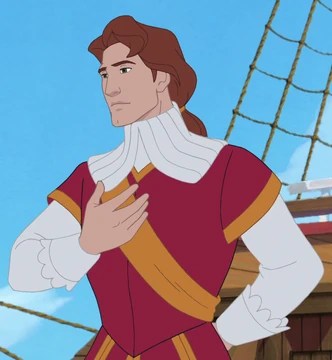
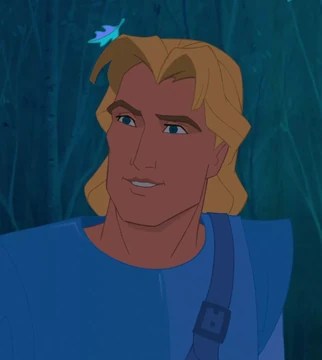
But, this actually made more sense when comparing it to the real Pocahontas (who I’ll be referring to with her actual name to differentiate the real person and the Disney character). Matoaka did end up marrying John Rolfe. But, it didn’t happen the same way. You know, with LOVE involved on both sides.
As I read more into the topic, I started feeling some kind of way about Rolfe and Matoaka’s relationship. The things I read do not lend themselves to the “John Rolfe and Matoaka were in love” theory.
The specifics of Matoaka’s life are still debated to this day, from why she hid her real name from the settlers to how she was treated while imprisoned. So, I’ll stick with facts that both sides of debates can agree on for this recap.
During the First Anglo-Powhatan War, Matoaka was taken prisoner by one Captain Samuel Argall, essentially to be ransomed in exchange for prisoners of war and stolen items. She was held in the Henricus settlement under guard for about a year. It is reported that she was so pissed about being held prisoner for so long, that when she was able to talk to her father, Chief Wahunsenacawh, she yelled at him for taking so long to get her out. She said that he cared more about weapons and tools than her. She even reportedly said that she would prefer to be with people “who actually loved her,” namely, the colonists. It was during her time in prison that she converted to Christianity and started going by “Rebecca,” to reflect her new faith.
When John Rolfe arrived in Virginia in 1613-14, he met and took an interest in the then-18 year old Matoaka. He was a widower by that point, having lost his wife and child in a shipwreck on the way overseas. According to a letter he wrote while trying to marry her, he fell deeply in love with Matoaka, describing his feelings as “have a long time been so entangled, and enthralled in so intricate a labyrinth, that I was even wearied to unwind myself thereout.”
Call me jaded or closed-minded, but I can’t really see how a 28-year-old plantation-owning colonist actually falls in love with an 18-year-old Native American prisoner of war. In reading the letter Rolfe wrote to Governor Thomas Dale, I get the feeling that Rolfe only saw Matoaka as an “exotic savage” needing his “guidance” in the ways of Christianity.
And by “Christianity,” I mean “his penis.”
He refers to Matoaka’s (nick)name only once, and doesn’t specify why he likes her so much. Rolfe does refer multiple times to his duty as a Christian to spread the word of God, and who better to do that to than an “unbelieving creature” like Matoaka. He added that showing Matoaka how to be a good Christian was something that God himself seemed to be asking him to do, with Rolfe having heard someone telling him to do this multiple times in his sleeping and waking hours. He also makes it clear that he knows marrying a woman who isn’t white or a Christian is frowned upon in their society, but says it will be okay because it’s God’s will.
I get the feeling that John Rolfe just wanted to fuck Matoaka without damning his soul to hell. He mentions multiple times that he wasn’t just aiming to marry her for sex. Why would you say that unprompted? You wouldn’t need to mention that if it wasn’t on your mind. Rolfe also said that if he just wanted to fuck, he would have chosen “Christians more pleasing to the eye, and less fearful in the offense unlawfully committed.” In modern English, Rolfe is basically saying, “If I just wanted to fuck someone, I would pick someone prettier and more legal.” This defensiveness makes it seem like Rolfe just wanted to smash a Native teenager legally. It’s not like you need to look at someone’s face to have sex with them, anyway. (I felt gross writing that, btw)
Think of it like this. Let’s say, for one reason or another, you needed permission from the governor to marry someone. In your letter to the governor, would you tell the governor that it is your religious duty to teach your betrothed the ways of your religion? Would you say that if you just wanted to smash, you would smash someone prettier than your betrothed? Would you say that when you first had these “loving” feelings towards your betrothed, you thought they were the work of Satan and tried praying them away?
Or, would you say something like, “I love this person. I love their kindness, intelligence, and confidence. I adore them with every fiber of my being, and I don’t care that ‘high society’ looks down on our relationship. They make me happy, I make them happy, and we want to be happy together forever.”
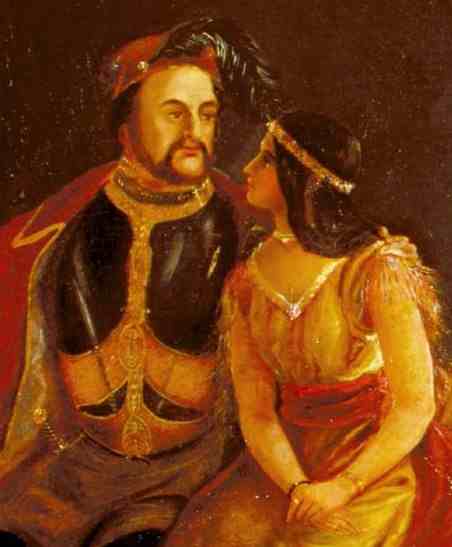
There’s also the issue of Matoaka’s possible first husband, Kocoum. Kocoum’s existence is debated, but according to oral tradition, he was real, had a child with Matoaka already, and died at the hands of colonists when Matoaka was kidnapped. To make things more murky, some oral traditions suggest that Matoaka had been raped by John Rolfe and got pregnant with his son before they were married.
So, we have a possibly grieving widow who was definitely forced to stay in an unfamiliar town and prevented from leaving. She was possibly forced to be made a Christian and possibly forced to change her name. To make things worse, someone possibly forced himself on her, then asked for permission from the governor to marry her. But, not because he loved her. He wanted to marry her because he didn’t have a wife, possibly knocked her up and now that she was a practicing Christian, this made her slightly more acceptable in society as a person.
All of that to say, Matoaka likely didn’t return Rolfe’s feelings. But, you know what she DID love? Not being imprisoned. So, when Rolfe proposed to marry her, she agreed. After getting permission from the governor of the colony and from the chief, Matoaka was released and given to John Rolfe to be wed. For two years, they lived on Rolfe’s plantation, raised their son, and ushered in a period of peace and commerce between the Native Americans and the colonists that persisted for a few years after Matoaka’s death.
In 1616, the London Company decided to bring Matoaka and a few other Powhatans close to her over to London, essentially to parade her and her posse around as the “civilized savages.” The fact that Matoaka converted to Christianity and spoke the King’s English was definitely a success of England’s mission to conquer stuff, then make it believe in Jesus. Matoaka was treated like a bit of a celebrity, getting to go to exclusive gatherings and meeting the king and queen a few times.

In 1617, the group was ready to go back to Virginia, but Matoaka suddenly grew very ill while on the ship. Once again, many debates and speculations arose from how she died. It might have been smallpox, dysentery, or even intentional poisoning. But, she randomly got sick, had to be taken ashore, and eventually succumbed to her illness at the approximate age of 21. Matoaka was buried in Gravesend, Kent in England. Hers and Rolfe’s son, Thomas, also got sick. Worried that his son would die on the voyage, he left the boy behind with relatives and pressed on to Virginia. John Rolfe would remarry, have another child, and would never return for his son before dying.
At least he left his son some stuff in his will.
There were a lot of moving parts when it came to Matoaka’s marriage to John Rolfe. It was definitely a political marriage, stopping the ongoing conflict between the Native Americans and the colonists. The governor gave his permission since it would benefit Jamestown’s economy. Wahunsenacawh allowed it because the colonists would likely harm Matoaka if he didn’t agree. Maybe Rolfe did love Matoaka (despite my age-gap related skepticism). After all, it had been a couple of years since his first wife passed, and that might have been enough time for him to grieve her loss. But, none of that changes how utterly awful the whole situation was for Matoaka.
Her story is muddled and romanticized when it really shouldn’t have been. As a Powhatan woman and the chief’s daughter, she should have been free to choose who she married and where her true home was. But, a lot of major life choices were ripped away from her.
Pocahontas 2 doesn’t quite hit the same knowing the protagonist will be dead at 21, buried thousands of miles from her homeland without her true name.

 Interesting Times with CaptainHoneydew
Leave a comment