
Many people who buy or sell goods and services are familiar with the Iron Triangle. Basically, a product or service has these three facets. A product or service can only be two of the facets at the third’s detriment. It was said to be impossible for a product to have all three qualities. But, in this modern day and age, there’s a quality about a product that makes the full Iron Triangle feasible, but also turns the shape into a rectangle.
Is the product or service made ethically?
Unfortunately, if the product/service is cheap, fast, and good quality, it’s guaranteed that it was not made ethically.
Products like clothing and foodstuffs now carry labels like “ethically sourced” or “ethically manufactured.” It’s one thing to show that the product wasn’t tested on an animal. But the way it was created, from harvesting the crop to shipping it to a store shelf, must be within ethical guidelines. But, in order to keep costs low and production fast, companies will sidestep or even ignore those guidelines.
For instance, the Nestlé company has been under scrutiny for decades for their unethical business practices. From food safety issues, to slave labor, to price gouging during a crisis, Nestlé is no stranger to ethics violations. But, I’d like to focus on Nestlé Waters, the bottled water division. The cost of making a bottle of water comes primarily from the plastic bottle it comes in, not the water itself. For America, the cost of making a single Nestlé-branded 16-ounce water bottle (the plastic, the packaging, etc.) is between $1 and $1.50, while the cost to fill it with water isn’t even one cent. The average cost of a still water bottle is about $1.50. Taking this into account, depending on where the bottle of water is being sold, Nestlé is either profiting or breaking even for each bottle sold.
So, Pure Life water is cheap to make/source, of good quality, and it’s made and sold quickly. How? By sourcing the water in unethical ways. From 2000, the springs where Nestlé gets their water have been pumped during droughts, pumped without permits (or expired permits), and have had their water supplies diverted for Nestlé use without permission.
Also of note, in 2005, the then-CEO of Nestlé, Peter Brabeck-Letmathe, said during an interview that the idea of water being a human right was an extreme one held by non-governmental organizations. Furthermore, he felt that the supply and cost of water should be privatized and given a market value.
So yeah. Even though he ran back his statement, Nestlé isn’t really winning any ethics awards.
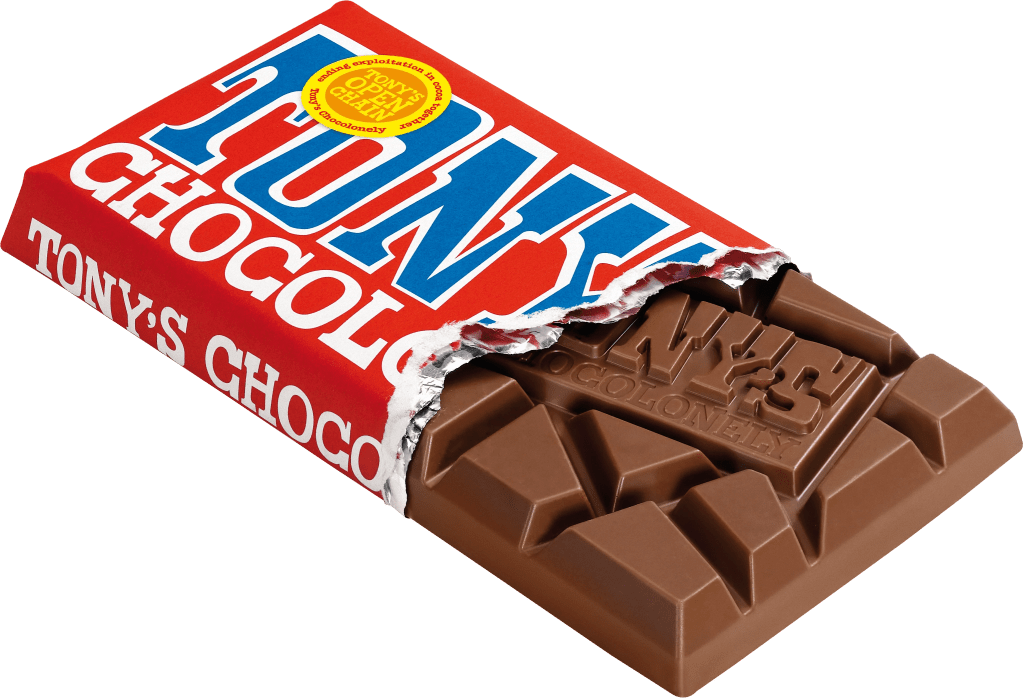
There are also instances where a company will sidestep its own ethical guidelines to achieve Iron Triangle/Rectangle aspects. Tony’s Chocolonely is billed as an ethical chocolate bar, with cocoa sourced from farms that don’t use illegal labor. Tony’s products are slightly more expensive than their competitors, because slave-free cocoa is more expensive. Their goal is to make their chocolate products, as well as all other chocolate companies, fit the Iron Triangle/Rectangle without the use of slave/child labor. But, Tony’s was removed from Slave Free Chocolate’s list of ethical companies in 2021 due to its collaboration with Barry Callebaut, a supplier that came under scrutiny for purchasing cocoa beans from farms that used slave labor. As of writing this, Tony’s status has not been restored to that list. Tony’s claims it’s working to fix the problem from within, only buying from Callebaut-funded farms known to be free of illegal labor, and helps resolve issues with its in-house monitoring system.
But, consumers aren’t completely satisfied with this response. For many, they can’t accept that Tony’s is working with Barry Callebaut at all, since that makes them somewhat accepting of Callebaut business practices. To make matters more murky, one of the places you can buy packs of Tony’s bars is Amazon…what with the underpaying employees and enforcing such strict delivery deadlines that the drivers need to pee in bottles. So, while Tony’s cause is noble, and they still fit several certified ethical guidelines, there are aspects of production and shipping that don’t align with their message.
Tony’s is very close to achieving Iron Rectangle status. Though, depending on who you ask, Tony’s doesn’t even make two corners of the rectangle. Critics feel Tony’s Chocolonely is way too expensive to be so mid. But, taste is subjective, so take that with a grain of salt.
Adding “ethical” to the Iron Triangle makes a product or service get to that rare state of good quality, cheap, and quickly produced. But, it’s impossible to find a product like that that was also created ethically. Also, companies as big as Nestlé have such a broad reach and many names they operate under that it’s difficult to avoid unethical products, period. It is near impossible to be an ethical consumer when none of the products consumed are made ethically.
Since many people nowadays are no longer willing to support companies whose morals don’t align with their own, they are looking harder into how a company’s products and services are made. They will find alternatives to products in order to not support an unethical company, but this means that the product they want will not be cheap or quick to produce/obtain, and may not be the quality they are looking for.
 Interesting Times with CaptainHoneydew
Leave a comment