What do Detroit: Become Human and the first two Oddworld games have in common? They’re about slavery and oppression.
Guess which one handled the subjects better? The one from the 90s about the fucking aliens.
**For our purposes here, I’ll be focusing on the original releases of Oddworld 1 and 2, since the remake of the second one alters the story.**
Our Messiahs For The Evening…
For Detroit, there are three protagonists, but the ones who deal more heavily in the slavery aspect are Markus and Kara. Both are androids who find that they can deviate from orders given by their masters. In both of their stories, they are charged with leading other androids to freedom. In Kara’s case, it’s her little android family on the run from their individual shitty masters. For Markus, that’s every android in Detroit, which he can do peacefully or violently.
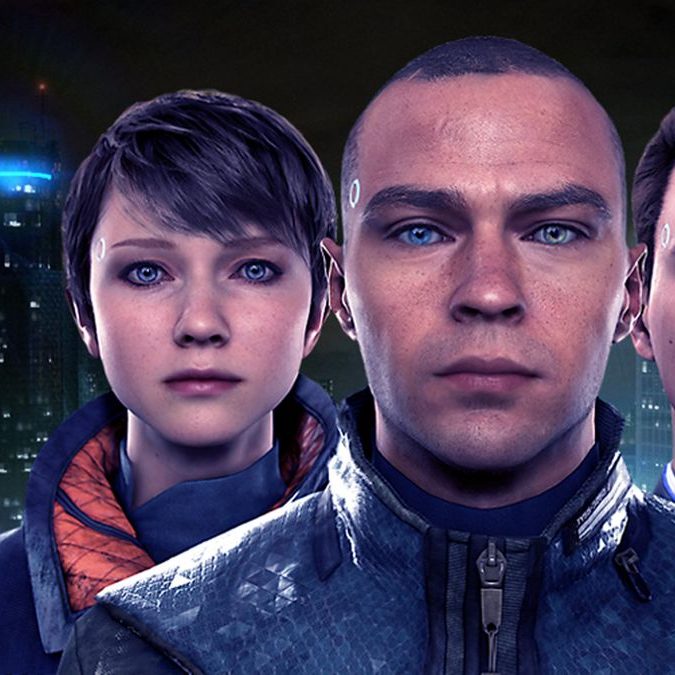
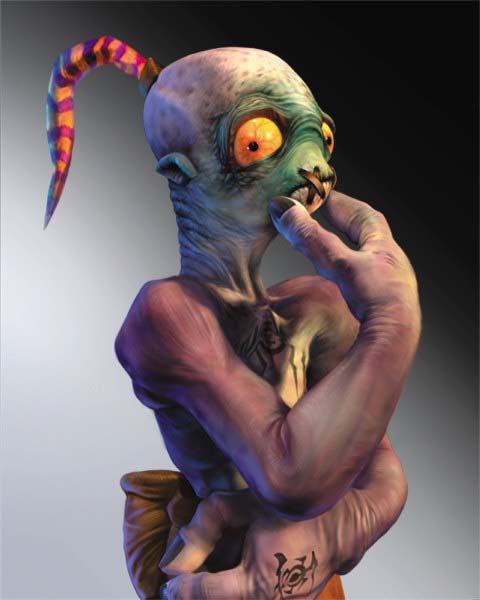
For Oddworld, our lead is Abe. He is a Mudokon, an alien born into a life of slavery to the dominant species on the planet, the Glukkons. Abe finds out that his overlords are planning to turn him and his people into the next hit food item, since the Glukkons hunted all the other creatures to near extinction. So, Abe escapes, but must return to free the other Mudokons before they become the next big product.
Symbolism and other Visual Crap
Both games are pretty heavy-handed with the symbolism. But, Detroit goes hard in the paint. There are “No androids/humans only” signs in bars and shops. Androids are made to stand at the back of buses. Markus, who looks like a Black man, is seen standing over an unconscious person and the cops first reaction is to pump him full of lead before asking questions. Slogans and tags that can be put onto the buildings during the protest in the park include a raised fist, and “We have a dream.” The default android uniform has a triangle on it, which is very reminiscent of prisoner identifications in Nazi Germany.
Of course, there are numerous blatant references to the Underground Railroad in the game. Kara and her group eventually meet Rose, a Black woman who helps androids get across the border into Canada, where there are laws protecting androids. The major scene with her and her son involve lying to the cops about her “guests” being humans. So, not only is Rose an Underground Railroad conductor, she’s also a Black Miep Gies.
Lastly, depending on how you play, Kara gets sent to a recycling center, where androids are stripped of clothes and their synthetic skin (where their identification numbers are visible), and lined up to be destroyed. People call it a “camp” in-game, saying it “brings to mind a dark point in human history.”
With Oddworld, the symbolism is more subtle despite it being unsubtle. The good guys are spiritual, often meditating and praying to higher powers. They live in huts and wigwams, wear loincloths, and haven’t industrialized, despite there being massive factories all over the planet. They lead simple lives and revere the creatures of the land.
The bad guys are cigar-chomping, designer-suit-wearing a-holes that will exploit a renewable resource until it dies out for profit, then send their underlings to kill whoever disrupts the money flow. They run the country and are too arrogant to think there would be a slave uprising until Rupture Farms explodes. They torture and butcher living things, including the work force, to make products out of them, then sell them back to whoever will buy, including the work force. All realities of slavery and late-stage capitalism, but we aren’t shown scenes of Mudokons getting whipped or raising a clenched fist up in the air when a factory explodes.
Our Victims
Most of the androids in Detroit who deviate don’t have a personality outside of their abuse-related trauma. This is especially true for the sex androids; the Traci couple that try to run away together in Connor’s story, and North from Markus’ story. With the Tracis, the blue-haired Traci does all the talking, mostly about how terrible it is to be a sex robot or how living without her lover isn’t worth it. The brown-haired Traci is literally a plot device; she’s a goal for the blue-haired Traci, barely speaks and potentially gets stuffed in the fridge for THE DRAMA.
North is just “the female love interest that hates THE ENEMY,” but her personality changes as the plot demands. As another sex android, she despises humans so much that she is willing to destroy Detroit with a dirty bomb. At one point, North yells at another member of Markus’ group that if he cares so much about humans, he should just go back to being a slave. (As an aside, that outburst is pretty damn problematic considering North is made to look White and Josh looks like a Black man.) If her radicalism stayed in her personality, it would have made her a bit stronger of a character. Maybe not one we would want to align with, but at least she’d be more grounded. Even going the “peaceful” route, she could still be in Markus’ ear about arming themselves during the protests. Instead, she abruptly changes her stance on violence in order to make her more aligned with Markus’ will.
In Oddworld, Abe and the other Mudokons aren’t painted as tragic heroes that can do no wrong. Abe is nice and a hero to his people, but he’s not good. He’s basically numb to all the death around him due to being born into a world of violence and misery. If he gets a Mudokon killed, he simply goes “Oops,” and keeps things pushing. He needs to kill his oppressors, since there is no reasoning with them. But, he giggles whenever he causes one of their deaths. I understand not feeling sympathy for his tormentors but…bro.
The other Mudokons are dicks to Abe, frankly, much like the Hebrews were to Moses during the 40 years in the desert. In Abe’s Exoddus, Abe starts by leading a small rescue party to save more Mudokons. The party goes from praising him for being a hero to cursing his existence in less than a day. Furthermore, some of them are willing to go back into slavery if it means getting more Soulstorm Brew, making Abe’s actions in Oddysee basically pointless. If I recall correctly, no one actually thanked Abe for his effort until Munch’s Oddysee, and even then, it wasn’t a Mudokon thanking him. And that’s not even getting into the lore of the Mudokons and what they were like before being enslaved. Let’s say, they weren’t “perfect victims” like the androids in Detroit. They didn’t go the route of forcing a species Queen to lay eggs so they could have a workforce forever like the Glukkons did, but it was still pretty rough.
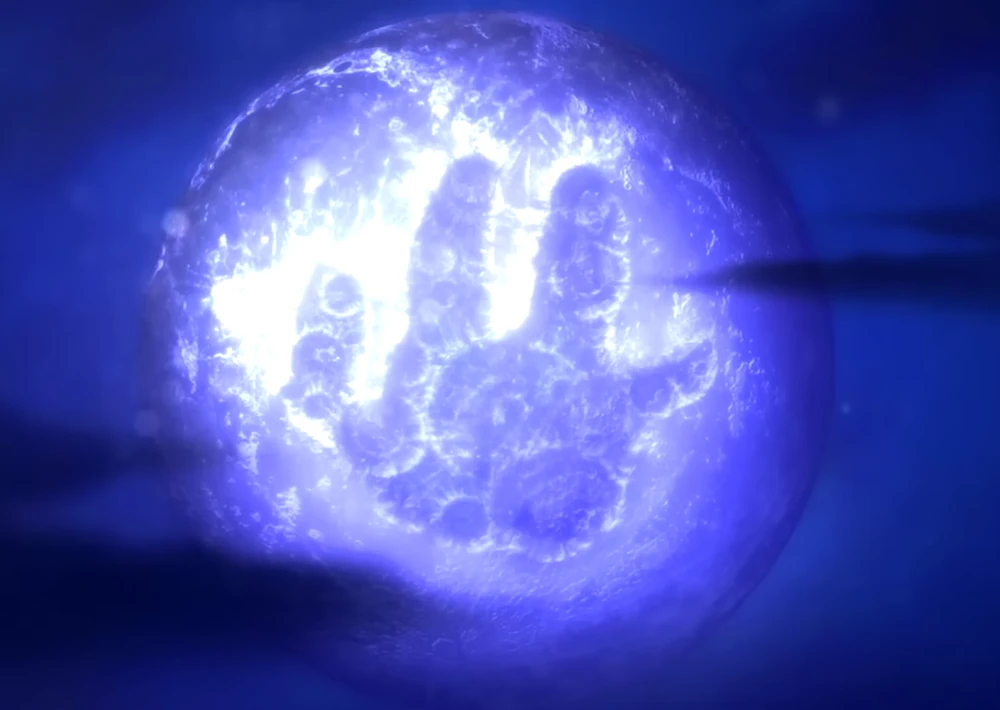
Let’s just say, seeing this moon made the Mudokons get too much dip on their chips as a society.
How Much Trauma is Too Much?
While slavery and abuse aren’t going to be happy and positive, there is a limit to how much you should lean into the character’s turmoil before it becomes melodramatic. Using the horrors of slavery as something to move the plot along in Detroit is most prominent during Kara’s story, but builds to a heavy-handed crescendo in Markus’ story if he keeps the protests peaceful. Throughout the game, the humans who are sympathetic to androids are few and far between. Meanwhile, the humans who hate androids are turbo-dicks to them, insulting them, smacking them around, and causing them so much pain that they voluntarily shut themselves down. Mostly, the turbo-dicks behave this way because “ANDROIDS TERK ER JERBS” but for others it’s just…because the androids can’t fight back, I guess? Until they do. Even knowing that androids have been deviating from orders and killing people, the turbo-dicks continue to push and push until someone gets stabbed 28 times.
While there are people out there who definitely abuse people that can’t fight back, that’s not most people, nor is it in such “Hollywood” ways. There is more to systemic abuse and oppression than putting out ALL the cigarettes on the butler-droid or bashing in the skull of every sex-droid mid-coitus. Taking things to such an extreme and keeping them there takes the narrative from “complex narrative about exploiting another group” to “Look how terrible humans are! Aren’t the androids sooooooo oppressed? Feel bad for them!”
With Oddworld, the oppressive Glukkons and their Slig underlings are cartoony villains. Because the game, while dark and gritty, is cartoony and doesn’t take itself too seriously. You would expect a cartoony game about the evils of overindustrialization to have unsubtle villains, who love seeing their slaves in misery or horribly maimed. The black-and-white handling of how bad they are gets a bit more of a pass.
We are shown the atrocities the Mudokons face frequently. While a few of those atrocities are played for laughs, they are also given enough seriousness that it doesn’t dip into melodrama. This is especially true for a few cutscenes in Exoddus.
A Mudokon wanting to follow Abe to freedom immediately walks over a cliff! Whoopsies!
Oh wait, he was one of the slaves the Glukkons blinded on purpose.
Soulstorm Brew gets the Mudokons all drunk and sick! That’s silly! Soda doesn’t make you get a hangover!
But it does, because it’s made with the bones and tears of other Mudokons.
Horrible acts are committed against an oppressed race, but are simply part of the overall plot; not introduced to make the audience feel worse for Abe and his brethren.
To play a game where you’re a member of an oppressed group lets you feel what the character feels. You are helpless to stop people’s mistreatment of you and others like you until the game allows you to fight back. And that’s not a good thing. It boils down bigotry, slavery, and other blatant violations of human rights down to a series of tropes and clichės. Furthermore, the idea of “press ‘X’ to stop racism” makes it seem like those same human rights violations can be solved with a few simple (in concept) actions, like having 3 nonviolent demonstrations or nuking the city.
With Detroit, provided the player doesn’t get Kara and Markus killed, they achieve their goal of freedom one way or another. The humans either grant androids citizenship or they avoid the nuked Detroit, which is only safe for androids to occupy. With Oddysee and Exoddus, Abe and 400-ish Mudokons are freed, but the problem isn’t solved. The Glukkons don’t have a change of heart or avoid messing with the Mudokons. They keep right on doing what they were doing, because that’s they way they’d been doing it for centuries. You know…SYSTEMIC OPPRESSION.
Quantic Dream CEO/director David Cage has gone on record saying that there wasn’t a political aspect to Detroit, and it was supposed to be about AI that gains self awareness and wants to be free of its programming. But, David Cage is a massive dickwaffle, so what he said is blatantly incorrect. When the title screen UI gives you a fun fact about the Underground Railroad, the androids all sing a gospel song sung at protests, and your character may end up at a concentration camp recycling center of death, you tend to think that the work is about something political.
When asked about what the intent was behind the themes in Oddworld, Oddworld Inhabitants CEO/director Lorne Lanning said he wanted to put the point home that under a capitalist society, ultimately, we are the product. There is also the theme of being unable to trust what’s right in front of us, since the powers that be are dictating the narrative. The simple fact that Lanning was more honest about his intent, and not pretending it was something other than what it was makes the cartoony game about the funny aliens a better commentary on the topic.
I won’t deny that there are many things to praise about Detroit: Become Human. It earned its spot as the best reviewed Quantic Dream title for its graphics, branching story paths, and of course, Connor and Hank’s bromance. But, the themes of slavery and oppression were handled poorly, reducing the struggles of those who are oppressed to formulaic story beats. You would think the topic “slavery is bad” would be pretty cut and dried. But Detroit, more grounded in reality than Oddworld, commits some of the cardinal sins of tackling slavery in a work of fiction; the atrocities as a whole are brought up for THE DRAMA only and those who are enslaved are not given any depth besides “I was/am a slave.”
 Interesting Times with CaptainHoneydew

Leave a comment